You run a tight estate. The Macs are the part you can’t.
You know Microsoft cold. Entra, Intune, Defender, you’ve made them work the way they should. And still, the Macs sit in the corner, half-managed, because the tool was never built for them. That isn’t your limit. It’s the platform’s.
You would never manage your Windows fleet with an Apple-first tool and call it done.
So why is it fine the other way around? Microsoft earned its depth on Windows, and that depth is real. Apple’s depth lives somewhere else, on a platform built for how Apple actually works. Respecting one platform enough to manage it properly means respecting the other the same way.
Windows, run on someone else’s model
Bent to fit a tool designed for a different OS. Features arriving late. Gaps you script around. You’d call that half-managed, because it would be.
Apple, run on a Windows model
Exactly that, in reverse. Enrolled, technically managed, and quietly held back by a platform that was never built for it. Your Mac users feel the difference every day.
The designer, the exec, the developer you fought to hire, they chose the Mac for how it feels to work on. Run it through a Windows-shaped model and that feeling gets sanded off.
Prompts that don’t belong on a Mac. Updates that lag behind what Apple shipped weeks ago. A machine that behaves like a managed PC wearing an Apple badge. Your people notice. They rarely raise it as a platform decision, they just quietly file it under “IT”, and a little of why they love their tools goes missing. The Apple in your business deserves to feel like Apple. So do the people using it.
Less firefighting for you. A real Mac for them.
The same facts a feature sheet would list, but here’s what they mean on a Tuesday, for the person running it and the person using it.
You build the Mac bits by hand
Deeper Apple needs fall to custom scripts you write and maintain. Third-party Mac patching is largely a do-it-yourself job. New macOS features wait on a Windows-first roadmap.
The platform already did it
True zero-touch the Apple way, a 700+ title auto-patching catalogue so updates aren’t manual, and same-day support for new macOS features as Apple ships them. You stop scripting around gaps.
A Mac that acts like a managed PC
Friction that doesn’t belong, slower access to the features they read about, the sense that their device is being tolerated rather than supported.
The Mac they actually chose
It behaves the way Apple intended. Access is quiet and quick. The thing that made them pick Apple is still there, because nothing flattened it.
Depth shows up first in security.
A Mac protected on paper and a Mac protected in practice look identical until the day they don’t. Apple-native security closes the distance between the two, and it does it without making your users feel watched.
Strong detection, shallow on the Mac
Microsoft Defender protects Macs and keeps improving. The deeper gap is everything around the alert: it doesn’t harden, configure or prove compliance on the Mac, and on Apple it leans on a management platform like Jamf to deploy and to act.
Built for macOS, end to end
Jamf Protect is Apple-native endpoint security, plus Jamf Security Cloud for web threat defence, content filtering and Zero Trust access on any network, and AI governance to see and control the AI tools your people already use. See Apple security →
Keep the stack you built. Give Apple the platform it deserves.
This was never an argument to leave Microsoft. It’s an argument to stop asking one tool to be brilliant at everything. Keep what you’re good at. Let Apple run on what it was built for.
Stays exactly where it is
- Entra ID as your identity backbone and conditional access
- Defender on Windows as your primary security core
- Microsoft 365 and the workflows your team already knows
- Sentinel as your SIEM, now with clean Mac telemetry flowing in
Moves to the platform built for it
- Mac and iPad management, deployment and patching on Jamf
- Mac configuration as code with Jamf’s Terraform provider, in the same Git workflow as the rest of your stack
Release: Available now
- Mac endpoint security, web defence and Zero Trust access
- New Apple capabilities supported the day Apple ships them
- One team accountable for the Apple estate, run with intention
And if your Macs are few and low-stakes, Intune may be all you need. We’ll tell you that too. The point isn’t to sell you Jamf. It’s to make sure the Apple in your business is run as well as the Windows already is.
From hands-on IT to a lighter week.
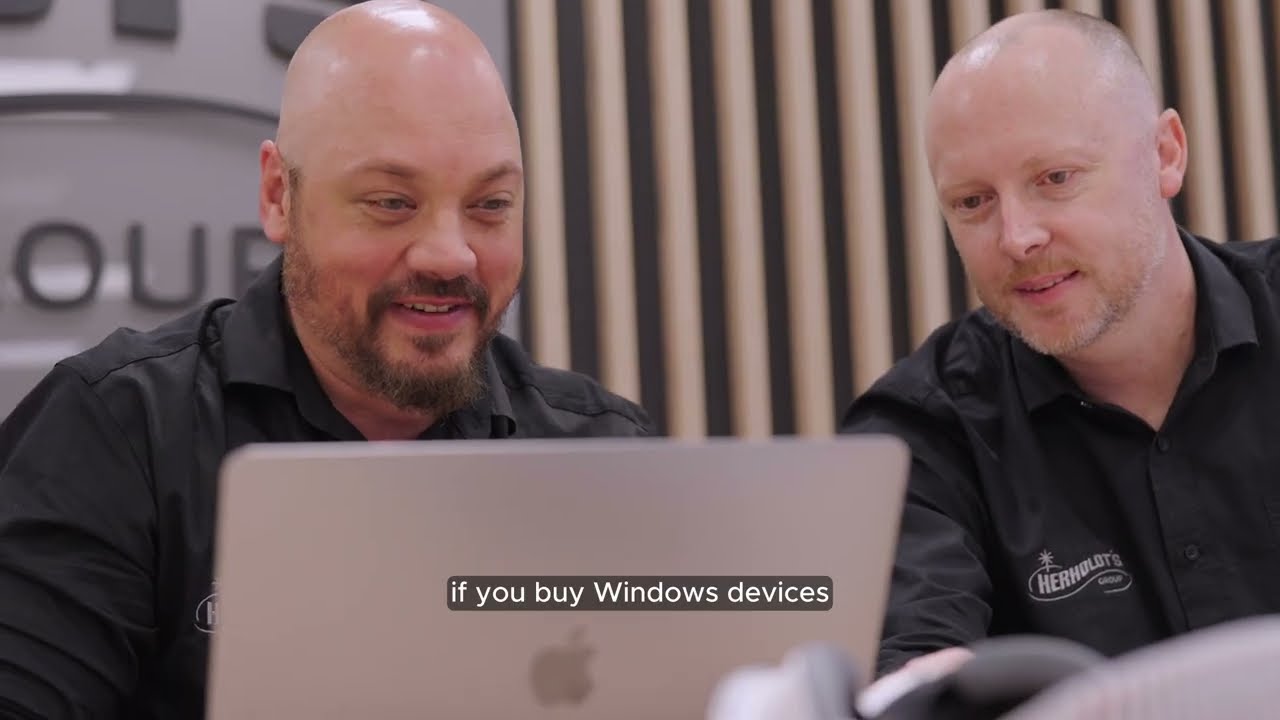 125 → 300users in 15 months
Herholdt’s Group scaled from 125 to 300 users in 15 months, and the IT team absorbed it without adding headcount, because Apple was finally run on the platform built for it.
This is the page, lived. Growth handled on Jamf, alongside the Microsoft stack, with one team accountable for the Macs instead of firefighting them.
Watch the story →The team that does only this.
A Jamf Elite Partner — the depth to run Apple properly alongside your Microsoft stack.
Picture the Macs as the best-run part of your estate.
Bring us what you run today. We’ll show you, honestly, where Intune is doing the job and where your Apple users are being short-changed, and what it takes to make the Macs as tight as everything else you run.